Reading Your Blueprint: How Methylation Patterns May Unlock a More Personalized Path to Healing
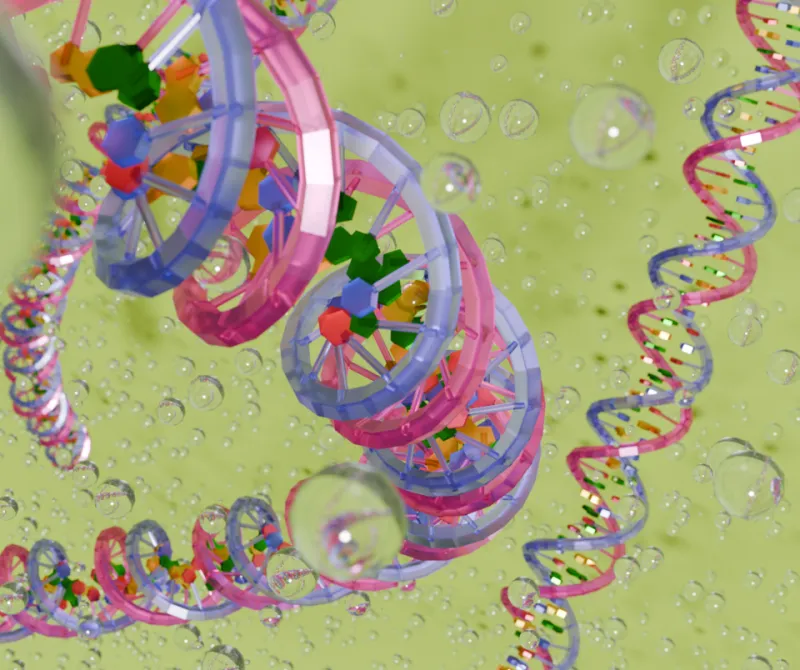
Photo: Gringer, CC0, via Wikimedia Commons
For decades, the prevailing model of pharmaceutical care operated on a relatively straightforward premise: a diagnosis leads to a prescription, and the prescription produces a result. Yet for millions of Americans, that linear equation repeatedly fails to deliver. Antidepressants that work brilliantly for one patient leave another feeling worse. Methotrexate resolves inflammation in one autoimmune patient while barely registering in another. Metformin produces dramatic metabolic shifts in some individuals and modest improvement in others.
The emerging field of nutrigenomics—and specifically the study of methylation—offers a compelling explanation for why, and a practical framework for what to do about it.
What Is Methylation, and Why Should You Care?
Methylation is a biochemical process that occurs billions of times per second throughout your body. At its core, it involves the transfer of a methyl group—one carbon atom bonded to three hydrogen atoms—onto DNA, proteins, and other molecules. This seemingly simple chemical handshake regulates an extraordinary range of biological functions: gene expression, neurotransmitter production, detoxification, immune response, and cardiovascular health, among others.
When methylation functions optimally, your body efficiently activates and silences genes in response to environmental signals, synthesizes mood-regulating neurotransmitters like serotonin and dopamine, and clears toxins through the liver. When it falters—due to genetic variants, nutritional deficiencies, or chronic stress—the downstream consequences can be wide-ranging and difficult to trace back to a single cause.
This is where epigenetics enters the conversation. Unlike your fixed DNA sequence, your epigenome is dynamic. Lifestyle factors, dietary choices, environmental exposures, and even emotional states can influence how your genes are expressed without altering the underlying genetic code. Methylation is one of the primary mechanisms through which this epigenetic regulation occurs.
The MTHFR Connection: A Genetic Variant With Real Clinical Consequences
No discussion of methylation is complete without addressing MTHFR—the methylenetetrahydrofolate reductase gene. Variants in this gene, particularly C677T and A1298C, are among the most common functional genetic polymorphisms in the US population, affecting an estimated 40 to 60 percent of Americans to some degree.
The MTHFR enzyme is responsible for converting folate from food into its active, usable form: 5-methyltetrahydrofolate (5-MTHF). When this conversion is impaired, the consequences ripple outward. Homocysteine—an inflammatory amino acid—accumulates in the bloodstream. Serotonin and dopamine synthesis slows. The liver's capacity to neutralize heavy metals and environmental toxins diminishes.
For patients managing depression, this matters enormously. Standard prescribing protocols for selective serotonin reuptake inhibitors (SSRIs) do not account for whether a patient can adequately synthesize the neurotransmitters those medications are attempting to regulate. A growing body of clinical research suggests that individuals with MTHFR variants may respond more robustly to treatment when active folate supplementation—specifically L-methylfolate—is incorporated alongside or even prior to pharmaceutical intervention.
The FDA-approved prescription supplement Deplin (L-methylfolate) was developed precisely around this insight, representing one of the clearest examples of methylation science translating directly into clinical practice.
Beyond MTHFR: The Broader Methylation Ecosystem
While MTHFR garners the most attention, it represents only one node in a complex methylation network. Other relevant genes include COMT, which governs the breakdown of dopamine and estrogen; CBS, which influences sulfur metabolism; and MTR and MTRR, which affect B12 utilization. Variants in any of these pathways can alter how effectively your body responds to both pharmaceutical agents and dietary inputs.
Functional medicine practitioners often approach methylation as an ecosystem rather than a single switch. A comprehensive methylation panel—available through specialized labs such as Genova Diagnostics, SpectraCell, or direct-to-consumer platforms like SelfDecode—can map an individual's specific variant profile and identify where support may be most beneficial.
Common nutritional interventions that functional clinicians use to support methylation include:
- Methylated B vitamins: Active forms of folate (5-MTHF) and B12 (methylcobalamin or adenosylcobalamin) bypass impaired conversion pathways.
- Betaine (TMG): Functions as an alternative methyl donor, helping to lower homocysteine independent of the folate pathway.
- Riboflavin (B2): Serves as a cofactor for the MTHFR enzyme itself; deficiency can compound the functional impact of genetic variants.
- Magnesium glycinate: Supports hundreds of enzymatic reactions, including those involved in methylation cycling.
- NAC (N-acetyl cysteine): Provides cysteine for glutathione synthesis, supporting the detoxification arm of the methylation pathway.
Autoimmune Disease, Metabolic Health, and the Methylation Thread
The relevance of methylation extends well beyond mood disorders. In autoimmune conditions such as rheumatoid arthritis, lupus, and multiple sclerosis, aberrant DNA methylation patterns have been identified as potential contributors to immune dysregulation—essentially, the epigenetic silencing of genes that would otherwise moderate inflammatory responses.
In metabolic health, poor methylation efficiency is associated with elevated homocysteine, which independently increases cardiovascular risk and may impair insulin signaling. For patients managing type 2 diabetes or metabolic syndrome alongside standard pharmaceutical protocols, optimizing methylation through targeted nutrition may represent a meaningful adjunctive strategy—one that operates through mechanisms distinct from, and potentially complementary to, medications like metformin or statins.
It is worth noting that some common pharmaceuticals can deplete the very nutrients required for healthy methylation. Metformin, for instance, is well-documented to reduce B12 absorption over time. Long-term use of proton pump inhibitors similarly impairs B12 and magnesium absorption. Oral contraceptives can deplete B6, folate, and zinc—all critical methylation cofactors. Patients on these medications may benefit from periodic nutritional assessment to ensure their pharmaceutical regimen is not inadvertently undermining their epigenetic resilience.
Getting Tested: What Consumers Should Know
Genetic testing has become increasingly accessible. Services such as 23andMe provide raw genetic data that, when analyzed through third-party interpretation tools like Genetic Lifehacks or NutraHacker, can yield actionable insights about methylation-relevant variants. More clinically rigorous options include working with a functional medicine physician or integrative psychiatrist who can order comprehensive panels and interpret results within the context of a patient's full health picture.
It is important to approach this information with calibrated expectations. A genetic variant is not a diagnosis. MTHFR heterozygosity does not guarantee methylation dysfunction any more than carrying a BRCA variant guarantees cancer. What genetic data provides is a probabilistic map—a set of tendencies that, when combined with laboratory markers like homocysteine, serum B12, and red blood cell folate levels, can inform more targeted clinical decisions.
A Collaborative Approach to Precision Wellness
The most productive application of methylation science is not a wholesale replacement of conventional pharmaceutical care, but rather an intelligent integration alongside it. Patients who understand their methylation patterns are better equipped to have informed conversations with their prescribers—advocating for adjunctive supplementation, requesting relevant lab monitoring, and understanding why a standard-dose medication may not be producing expected results.
For health-conscious Americans navigating complex diagnoses, methylation represents one of the most actionable frontiers in personalized medicine. It is a domain where lifestyle, nutrition, genetics, and pharmacology converge—and where the gap between what is genetically probable and what is clinically experienced can, with the right support, be meaningfully narrowed.
Your genes wrote the first draft. Epigenetics—and the choices that influence it—determine how the story unfolds.