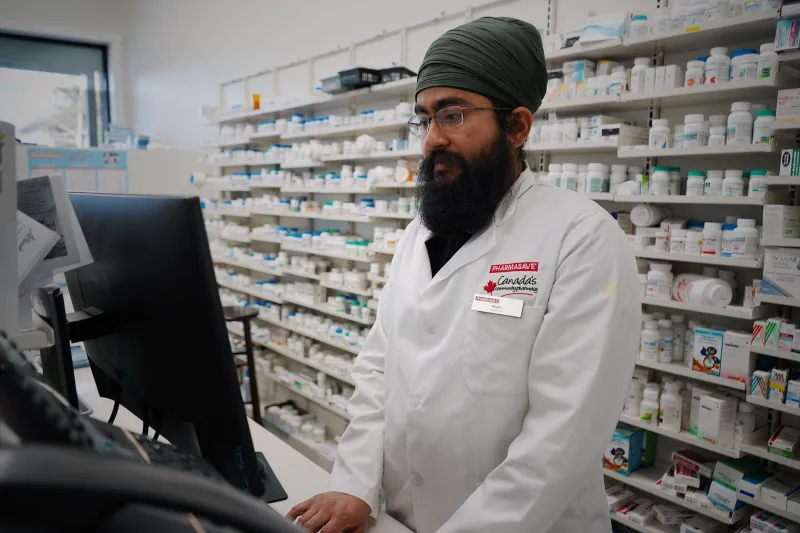
The Most Underused Health Resource in America Wears a White Coat and Stands Ten Feet Away
There is a doctorate-level clinician in nearly every American town, accessible without an appointment, who reviews your entire medication list, knows what's on backorder, and can often save you hundreds of dollars a year. Most of us say hello, sign the tablet, and leave.
Pharmacists consistently rank among the most trusted professionals in national surveys, and for good reason: they are frequently the last line of defense between a prescribing error and your bloodstream. Yet patient surveys suggest the average interaction lasts under two minutes and involves almost no clinical conversation. Working pharmacists will tell you the questions they wish patients asked are simple, specific, and occasionally life-saving.
Here are seven of them.
1. "Do any of my supplements interact with my prescriptions?"
This is the question that prevents the most quiet harm, and the one patients almost never ask—because they don't think of supplements as drugs. Pharmacists report that patients routinely volunteer their prescription list but omit the fish oil, St. John's wort, ginkgo, or high-dose vitamin E sitting in the same kitchen cabinet. St. John's wort alone interacts with antidepressants, blood thinners, and transplant medications. Bring the bottles. All of them.
2. "Is there a cheaper way to get this?"
Generic alternatives, therapeutic equivalents, discount programs, and 90-day fills can cut costs dramatically, but nobody volunteers this information unless you ask. Pharmacists know which drugs have gone generic this year, which manufacturers offer savings programs, and when a slightly different dose lands in a cheaper tier. One question can save more than an entire afternoon of phone calls to your insurer.
3. "What's the best time of day to take this—and does food matter?"
Timing is not a footnote. Thyroid medication requires an empty stomach and separation from calcium and iron. Some blood pressure medications work best at night. Certain statins are more effective in the evening, others aren't. Cholesterol drugs, antibiotics, and bisphosphonates all have food rules that change absorption significantly. If your pharmacist doesn't tell you, ask.
4. "What side effects should actually worry me?"
Patients either read the entire warning insert in a state of alarm or ignore it entirely. A pharmacist can triage: which effects are common and harmless, which warrant a call to the office, and which mean stop the drug and get seen. That five-minute conversation prevents both unnecessary panic and dangerous delay.
5. "I'm starting a new drug—does it replace anything I'm already taking?"
Duplicate therapy is one of the most common pharmacy catches. Patients seeing multiple specialists accumulate overlapping medications: two drugs from the same class, an over-the-counter sleep aid that contains the same antihistamine as a prescription, an NSAID on top of a blood thinner. Pharmacists run interaction software across your whole list in seconds. Your cardiologist may not know what your psychiatrist prescribed.
6. "Can you do a brown-bag review?"
Many pharmacies offer comprehensive medication reviews—bring every pill, supplement, and herbal product you take in a bag, and a pharmacist will go through the entire list with you. Medicare plans often cover this at no cost under medication therapy management. It is arguably the highest-value free clinical service in American healthcare, and most patients have never heard of it.
7. "What do you wish more people knew?"
Ask this and you'll often get the most valuable answer of the visit. Pharmacists describe patients who stopped antibiotics early, doubled up on doses after forgetting one, crushed extended-release tablets that were designed to dissolve slowly over twelve hours, and mixed liquid medications using kitchen spoons. They see the mistakes before the emergency room does. They are, quite literally, paid to answer your questions—yet surveys show most patients ask none.
The Counter Is a Consultation
The cultural script at the American pharmacy counter is transactional: name, insurance, signature, next. But the law in most states requires pharmacists to offer counseling on new prescriptions for a reason. The ten feet between the drop-off window and the consultation counter is the shortest distance between you and a prevented hospitalization.
Your physician knows what to prescribe. Your pharmacist knows what everyone else prescribed. Use both.